INSIDE SHINE
Why we built a dating app around a flame (and what a compatibility score can and can’t tell you)
Most dating apps lead with a photo and a distance. Shine leads with who someone is and how well the two of you might get along, drawn as a flame. Here is the reasoning behind that choice, how the score works, where its limits are, and how to use any compatibility signal without letting it decide for you.
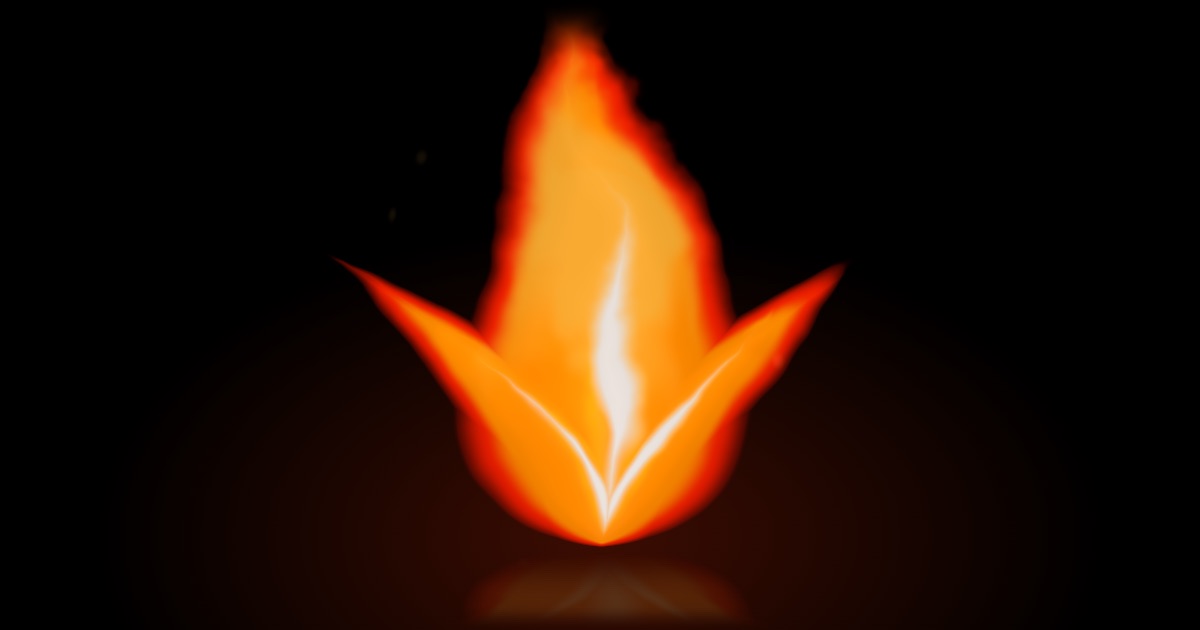
Shine (goshine.app) is a free dating app for iPhone and Android where your personality becomes a flame. The questions you answer at sign-up draw its shape, movement and color, so you can read someone’s temperament in a second. When you open a profile, the two flames meet and a Soul Match score from 0 to 100 appears, computed only from your answers, never from photos. We chose a flame because it shows a whole temperament at a glance, without turning people into a grade or a box.
The problem we were trying to solve
Open any mainstream dating app and the first two things you learn about a stranger are what they look like and how far away they are. Both are real information. Neither tells you how that person spends a Sunday, whether they want something serious, or how they behave when a plan falls through.
The usual fix is more text: longer bios, more prompts, more fields. That helps people who write well and read carefully, and it exhausts everyone else. After the fortieth profile, nobody is reading paragraphs anymore. That fatigue is a big part of dating app burnout.
So the design question was narrow: what is the smallest thing you could put next to a photo that says something true about the inside of a person, and can be read in one second? Not instead of the photo. Next to it. Shine keeps photos, profiles and like or pass, because nobody should have to learn a new way of meeting people.
Why a flame, and not a number, a label or a badge
We weighed the obvious alternatives. Each one fails in a specific way, and the flame is what was left when we removed those failures.
| Option | What it tells you in one second | Where it breaks |
|---|---|---|
| Photo first, nothing else | Looks, style, sometimes context | Says nothing about values, pace of life or intent. Rewards the most photogenic, not the most compatible. |
| A bare percentage | How well you might fit | Feels like a grade. People chase the number and stop looking at the person behind it. |
| A personality-type label | A familiar category | Boxes are blunt: two people with the same four letters can be very different partners. Labels invite stereotypes. |
| Badges and tags | A list of interests | Shared hobbies make an easy first message but say little about how two people handle a busy week or a disagreement. |
| A flame | A temperament: steady or wild, quiet or bright, slow or quick | Needs a few seconds to learn to read, which is why Shine also names it and shows a score. |
A flame has a shape, a color, a rhythm and a temperament, a bit like the way people love. Some are tall and steady, others wild and many-tongued, others quiet and blue. Nobody has to be told that a flickering, darting flame belongs to someone spontaneous. And unlike a label, a flame is continuous: there is no fixed list of shapes, so no two are alike.
There was also a design reason. In Shine, the interface itself is monochrome, and only the flame carries color. The color on screen comes from the person, not from the logo.
How your flame is drawn: three acts
At sign-up, Shine asks twenty-seven questions in three acts. Every answer visibly changes the flame, and that is the only reason a question is allowed to exist in the flow. If an answer would not change anything you can see, we cut the question.
- Matter: where your fire stands. Your presence and your pace of life. This shapes the body of the flame.
- Breath: how your fire moves. Your spontaneity and your tempo. This shapes how the flame moves.
- Light: what your fire burns for. Your intent and your attachment. This shapes what the flame is reaching toward.
A flame needs at least five answers to light, and the more you answer, the more precise it becomes. If you change your mind later, you can replay the questions in Settings → My flame: the flame is redrawn and every score is recomputed. You can try the same flow on the web with the flame test; the flame on this website runs on the same engine as the app.
What the Soul Match score actually compares
When you open a profile, the two flames meet, fuse, and the Soul Match score appears. Here is what happens underneath, without the ceremony:
- It compares answers, axis by axis. The axes are what you look for, rhythm, attachment, social energy, warmth and openness, plus values.
- The axes are weighted. Values and intent count the most. Two people who want different things from dating rarely make it, however well everything else lines up.
- Some axes reward similarity, others a light contrast. What you look for and your values work best when they match. Social energy is a classic case where a little difference helps: an introvert and an extrovert often complete each other.
- It is symmetric. You both see the same number. Nobody is a 90 for you while you are a 40 for them.
- It is deterministic. The same answers always give the same score, on every phone.
- It never reads your photos, your messages or your location, and it does not change with your subscription.
The result lands on one of four tiers. There is no negative verdict anywhere on the scale: a flame never dies in Shine.
| Tier | Score | What it means in practice |
|---|---|---|
| Ember | under 35 | Your answers pull in different directions. Not a no: a fire that needs kindling, and a reason to look at the profile with curiosity rather than assumptions. |
| Spark | 35 to 59 | Something flickers. Some axes line up, some do not. Read the “why you two” breakdown to see which. |
| Flame | 60 to 84 | Your fires speak the same language. A solid base for a real conversation. |
| Blaze | 85 and above | Rare. Two souls burning as one, on paper at least. |
On our calibration bench, the average pair lands around 62, about 7% of pairs reach Blaze, and around 4% burn above 90. That last threshold matters, because above 90%, you can write directly, without waiting for a mutual like. The conversation opens by showing the score that allowed it, so the other person knows why you could write. It is limited to a few direct messages a day: rarity is the point. Lower down, other doors open: between 40 and 59 an icebreaker, between 60 and 74 a Flash to be seen, between 75 and 84 a Spark to skip the line. (Yes, Spark is both a tier and an action. The flame vocabulary is small on purpose.)
What no compatibility score can know
This is the part a product page usually skips, so here it is plainly. A score built from answers measures fit on paper. It cannot measure chemistry.
Relationship research is fairly consistent on this. A well-known 2017 speed-dating study by Samantha Joel and colleagues collected detailed questionnaires before people met, then tried to predict which specific pairs would feel mutual desire. The questionnaires predicted how much someone liked people in general, but barely predicted who would click with whom. Attraction between two particular people turned out to be something that happens when they meet.
At the same time, the research that does hold up points in a useful direction. Studies of real couples find that partners resemble each other more in values and attitudes than in personality traits. And in everyday dating, the fastest way to lose three months is to discover late that one of you wanted something serious and the other did not. That is why Shine weights values and intent the most, and why the score is designed as a contact privilege, not a promise.
In practice, that means a high score earns a conversation, not a relationship. And a low score is a weak reason to skip someone whose profile genuinely interests you. If you want to go deeper on what predicts a lasting fit, our guide to what makes two people compatible covers it without any app attached.
How to use a compatibility score well (on Shine or anywhere)
Whatever app you use, compatibility signals help most when you treat them as a starting hypothesis. A few situations come up again and again:
- High score, flat conversation. Paper fit is there; conversational fit is not, yet. Ask one concrete, open question about something on their profile before deciding. If two exchanges in a row stay one-word, let it go without guilt.
- Low score, but you like their profile. Like it anyway. Then check which axes create the friction. A difference in rhythm (early riser vs night owl) is easy to live with. A difference in intent (something serious vs something casual) is not, and it is better to ask about it early.
- Same archetype as you. Fun to discover, not a guarantee. Two people with the same temperament can mirror each other’s strengths and blind spots.
- A Blaze that does not survive the first date. Normal. The score never saw how you laugh, how they treat a waiter or how you feel next to each other. That is what the date is for.
If you get a high score and want to open with it, keep it light and specific. A few examples that work better than “hey, 92%!”:
- “Apparently our flames agree on almost everything. Let’s test that: beach or mountains for a long weekend?”
- “The app says we’re a Blaze. I’m skeptical of anything that confident, so tell me one opinion of yours I’ll disagree with.”
- “We seem to share the same pace of life. What does a perfect slow Sunday look like for you?”
For more openers that do not depend on a number, see our first message ideas.
Test the axes yourself on a first date
The axes Shine scores are not secret, and they are worth checking in person whether or not you use the app. Here is what each one is really about, and a question that brings it out naturally:
| Axis | What you are really checking | A question that brings it out |
|---|---|---|
| What you look for | Whether you want the same kind of relationship, at a similar pace | “What would make the next few months of dating feel like a success for you?” |
| Values | What each of you will not compromise on | “What’s a decision you made that people around you didn’t understand at first?” |
| Rhythm | Daily tempo: routines, energy, spontaneity | “Are you a plan-the-weekend person or a see-what-happens person?” |
| Social energy | How you recharge, and how much social life you each want | “After a big week, what does your ideal Friday night look like?” |
| Attachment | How you each handle closeness, distance and reassurance | “How often do you like to hear from someone you’re dating?” |
| Warmth | How affection and care get expressed | “Who in your life is best at making you feel looked after, and how do they do it?” |
| Openness | Appetite for new things, places and ideas | “What’s the last thing you tried for the first time?” |
You will find more in our list of first date questions. For the attachment axis in particular, it helps to know the attachment styles that grew out of Bowlby and Ainsworth’s work: they describe patterns, not destinies. And if you are on the quieter end of social energy, dating as an introvert has practical ways to make that an advantage.
Twenty-eight archetypes: names, not boxes
At the end of the flow, Shine names your flame among twenty-eight archetypes, from the Lunar and the Storm to the Dancer and the Twin. You keep yours in the Reliquary, and you collect the archetypes of the people you meet.
The archetype is a name for a region of possible flames, not the flame itself. Two Storms are never identical, the same way two people with the same personality type are never the same partner. That is the difference with systems built on a handful of fixed types, which we compare honestly in our guide to the 16 personality types in dating: types are a good conversation starter and a poor matchmaker.
What we refuse to do
A design choice is also a list of things you will not build. These are ours:
- Grade you on your photos. Photos introduce you. They never enter the score.
- Show your exact location or a distance. Your position is rounded before it leaves your phone, and no distance is displayed anywhere, including on the world map.
- Say “no”. No tier is a rejection. An Ember is a fire that needs kindling.
- Sell your score. The score does not change with your subscription. The Pass is optional and the app is free.
- Sell your data. No data is sold, whether you pay or not.
- Hide how it works. The method is written down, on this blog and on the Soul Match page.
Safety follows the same logic: selfie verification, end-to-end encrypted chat, one-tap reporting reviewed by a human team, an 18+ community, and immediate account deletion from Settings.
Who builds it
Shine is made by Yando, a small independent studio in Singapore that has built dating apps since 2021. Two native apps, written by hand, one for iPhone and one for Android, available in 42 languages, and the same flame engine that burns on this website. Beyond the flame, the app has a feed sorted by soul rather than distance, a galaxy where closer stars mean higher compatibility, and Spotlight, which lights one person a day whose flame answers yours. More on the team on our about page.
Frequently asked questions
What is the Shine dating app?
Shine is a free dating app for iPhone and Android where your personality is drawn as a flame from your answers. Every profile shows its flame and a Soul Match score from 0 to 100, next to the usual photos and like or pass.
Does Shine use my photos to match me?
No. The Soul Match score is computed only from your answers. Photos introduce you to people but never affect the score.
How is the Soul Match score calculated?
It compares two sets of answers axis by axis, with values and intent weighted most, then rhythm, social energy, attachment, warmth and openness. It is symmetric, so you both see the same number.
What is a good Soul Match score?
Anything from 60 (the Flame tier) is a strong start, and 85+ is a rare Blaze. Above 90 you can message directly, but no score replaces actually talking.
Do dating personality types predict compatibility?
Only partly. Matching on values and on what you want from dating matters a lot, but research suggests chemistry between two specific people is hard to predict before they meet.
What are the Lunar, Storm and Dancer flames?
They are three of Shine’s 28 flame archetypes, the names the app gives to families of similar flames. Yours appears at the end of the questions, and the free flame test on goshine.app shows which one your answers draw.
Can I change my flame?
Yes. In Settings → My flame you can replay the questions; your flame is redrawn and all your scores are recomputed.
Who makes Shine?
Yando Pte. Ltd., an independent studio based in Singapore that has built dating apps since 2021.
Keep reading
 CULTUREDating app burnout: how to recognize it, recover, and date again without dread11 min read